Find the Hidden Cat in the City: Visual Puzzle Challenge
Find the Hidden Cat in the City: Visual Puzzle Challenge
Visual puzzles and optical illusions are fantastic tools for training your brain, sharpening your focus, and testing your visual attention. Today’s challenge features a detailed, monochromatic illustration of a sprawling metropolis full of tall skyscrapers, endless windows, and sharp geometric angles.
Somewhere within this complex jungle of concrete and glass, a clever little cat is hiding in plain sight. Can your eyes spot the hidden feline before the timer runs out?
The Challenge: A Monochromatic City Maze
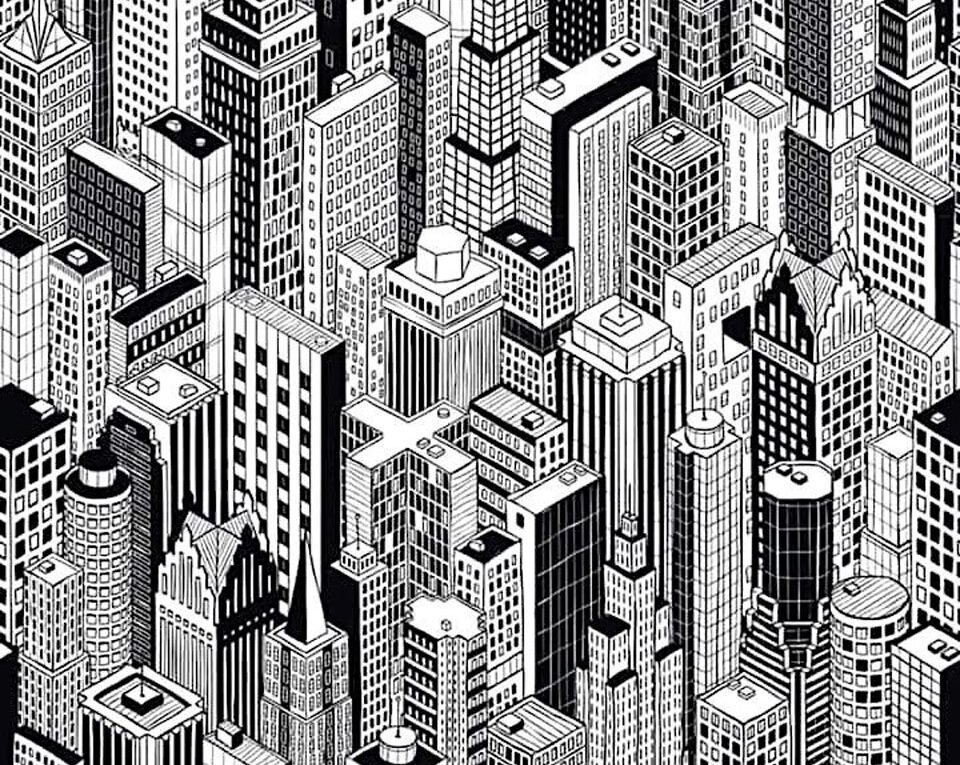
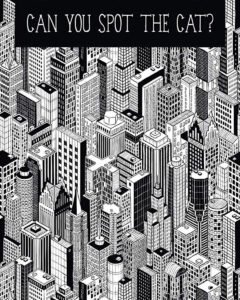
At first glance, the illustration appears to be nothing more than a busy city skyline drawn in classic black-and-white line art.
-
Repetitive Patterns: The image contains hundreds of tiny square windows, roof ledges, and repeating geometric shapes that trick your brain into seeing only uniform structures.
-
Monochromatic Disguise: Without color variations to separate objects, your eyes easily get overwhelmed by the overlapping lines and vertical towers.
-
The Hiding Spot: Felines are notorious for sneaking into tight, unexpected places. In this city landscape, the cat’s soft silhouette is cleverly integrated into the sharp outlines of the architecture.
Most observers take upwards of two minutes to locate the hidden object because the brain automatically groups similar patterns together, ignoring minor subtle differences.
Why Visual Puzzles Are Great for Cognitive Health
Engaging with hidden object games and visual brain teasers does more than just offer quick entertainment. Research in cognitive psychology shows that regular observation exercises stimulate vital mental functions:
-
Improves Visual Scanning: Training your eyes to scan systematically improves spatial awareness and reading efficiency.
-
Enhances Pattern Recognition: Identifying organic shapes (like a cat) hidden within rigid geometric frameworks forces the brain to process visual information more deeply.
-
Boosts Focus and Patience: Taking time to examine fine details helps build sustained mental concentration in an era of digital distractions.
Proven Tips to Find the Hidden Cat Quickly
If you want to beat the clock and find the hidden feline in record time, try using these systematic search techniques instead of randomly gazing at the image:
-
Break the Image into Quadrants: Divide the picture mentally into four equal quarters (top-left, top-right, bottom-left, bottom-right) and scan one section at a time.
-
Look for Soft Curves: Cities are made of straight lines, right angles, and squares. A cat’s body consists of smooth curves, pointed ears, and a curved tail—look specifically for shapes that disrupt the straight grid.
-
Check the High Ground: Cats love elevated perches. Pay special attention to rooftops, window sills, water towers, and balcony ledges near the upper half of the city skyline.
The Solution: Where Is the Hidden Cat Sitting?
Did you manage to spot our sneaky feline friend?
If you are still searching, don’t worry—this visual puzzle is designed to be tricky!
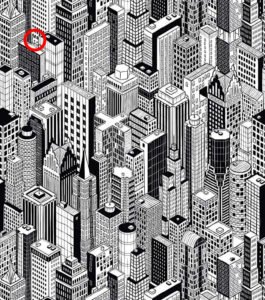
Solution Reveal: Look closely at the upper-right quadrant of the city skyline. On top of the second-tallest square tower, right next to the small roof antenna, you will see a subtle silhouette. What appears at first to be an architectural roof ornament actually forms the unmistakable shape of a cat sitting quietly with its tail wrapped around its paws, looking down at the street below!
Frequently Asked Questions
Why do optical illusions and hidden object puzzles trick our eyes?
Our brains rely on shortcuts called heuristics to process visual information quickly. When presented with repetitive patterns like city windows, the brain fills in details automatically, often blinding us to small anomalies.
How long does the average person take to solve this puzzle?
The average solver takes about 45 to 60 seconds to locate the hidden cat, while those with highly trained visual processing can spot it in under 15 seconds.